
Rule 2 / Case 9

Updated: May 2
Always Dress For The Water Temperature
Brigitte Manspeaker
March 21, 2026 - Tomalas Bay, CA
The Accident
Just after 6pm on Saturday, March 21, someone on shore called 911 and reported a capsized kayak with two people in the water. The location appears to have been close to Kilkenny Beach. Multiple rescue units responded from the Marin and Sonoma County Sheriff's Offices, Marin County Fire, the U.S. Coast Guard, and the National Park Service.

The Sonoma County Sheriff’s Henry-1 helicopter was already airborne at the time of the call and arrived on scene within 12 minutes. Video from the helicopter shows one person in the water and a dog on the hull of the overturned kayak. The rescue swimmer was able to rescue that person using a 100-foot longline. Conditions were rough for kayaking, with 3-foot wind waves reported. The estimated water temperature was 54F (12.2C)
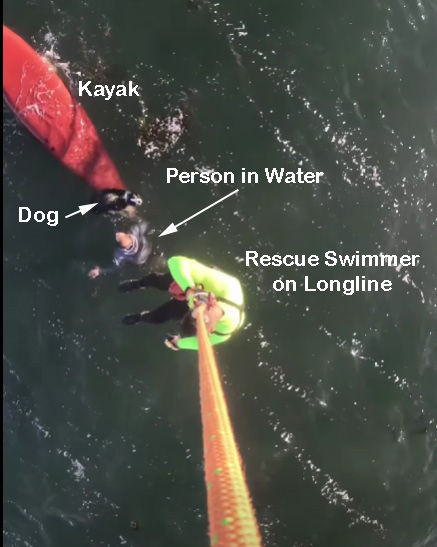
The victim told the Flight Officer that when their kayak capsized, his girlfriend slipped out of her personal flotation device and drowned. After bringing him ashore, the Pilot and Tactical Flight Officer, went back out to search for the second victim.
After a short search, the second victim, identified as 37-year-old Brigitte Manspeaker of Los Angeles, was located approximately 200 yards away from the kayak. She was unresponsive, face down in the water, and being carried by the outgoing tide.
She was brought to shore via longline, where Henry-1’s Tactical Flight Officer and Pilot immediately began resuscitation efforts until Marin County Fire Department paramedics arrived and assumed patient care. Henry-1 then transported her with a MCFD Paramedic to a local hospital, where she was later pronounced deceased.
National Park Rangers responded by boat and safely recovered the dog from the water. Officials said the dog was in stable condition and was picked up by a friend of the couple.
A Tricky Location
Tomalas Bay is a beautiful salt water bay located about 25 miles NW of the Golden Gate Bridge. It’s about 12 miles long, ranges in width from one half to 1.5 miles (0.7-2.4 km), and is oriented in a NW / SE direction.

Along most of its length, it separates the mainland from picturesque Point Reyes National Seashore. The northern end opens to Bodega Bay and the Pacific Ocean via Sand Point Passage, a narrow, potentially very hazardous entrance that’s roughly 1/3 mile (0.54km) wide. On a calm, sunny day, Tomalas Bay looks like a very inviting location to kayak, and its proximity to San Francisco draws many paddlers to its shores.

But the water is very cold year-round, there’s a tidal current, fog is common, and the shoreline topography channels and accelerates wind along its entire length. It’s also relatively shallow, with an average depth of only 13 feet (4 meters), and a maximum depth of roughly 20 feet (6 meters) in some channels. As a result, the wind can create large, steep waves that get many paddlers into trouble. These waves can be accentuated if the wind is blowing in opposition to the tidal current. For example, from the North against an ebb (outflowing) tide.
Mouth of Tomalas Bay
Due to the interaction of wind, ocean swell, tidal current, and shallow water, the mouth of Tomalas Bay - like most other inlets along the entire West Coast - can be a treacherous location for unwary boaters, especially when the tide is flowing out into the Pacific Ocean. The State of California specifically warns about those hazards in a special publication, in which it notes:
“Much of the area near the mouth of the bay is shallow and the water frequently is rough. The Pacific Coast Pilot, published by the National Ocean Survey includes a strong word of caution for boaters in this area: The entrance bar is dangerous and should not be attempted by strangers. In one year alone, 13 boaters lost their lives here. Most of them were unfamiliar with the problems unique to this area. The loss of some craft was caused by large breaking waves in the shallow area.”

Even when there aren't large breaking waves, conditions at the mouth of the bay can be very confused with the water heaving up and down and waves moving in many different directions.
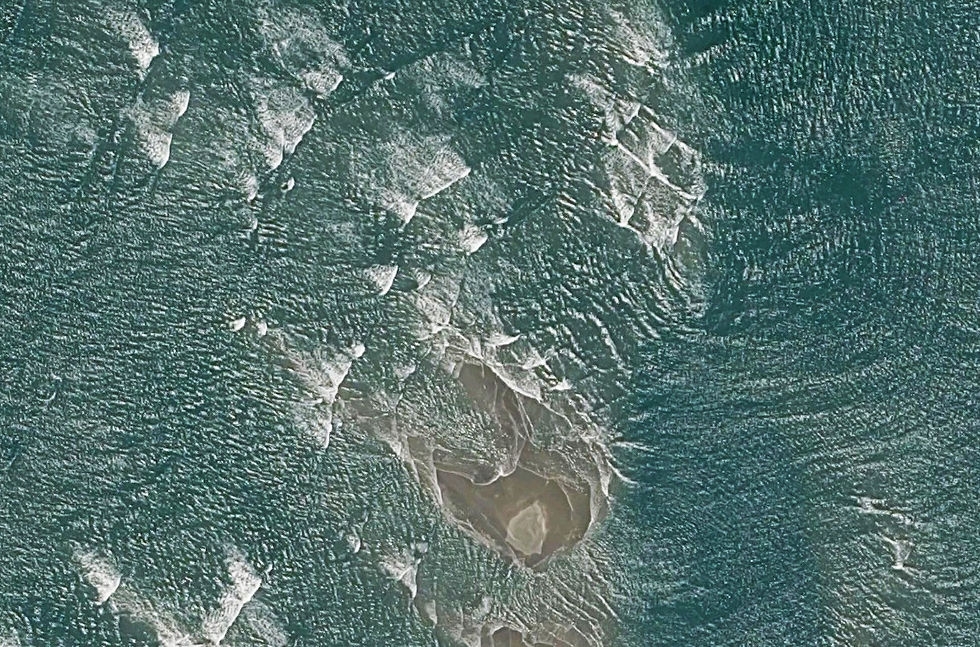
This particular accident happened roughly 7 miles (11km) south of the mouth of the bay and was caused by 3-foot wind waves - which are the usual problem on the bay.
54 Kayakers Rescued
For example, in a very notable incident one night in September 2015, firefighters rescued 54 kayakers on Tomales Bay who got into trouble on a guided bioluminescence tour when the wind increased and conditions became hazardous. The kayakers fortunately managed to make it ashore at Hog Island and Pelican Point, but it took multiple trips for rescuers to get them all ashore by 1am. This is the kind of close call that could easily have resulted in a dozen or more fatalities.

September 2015 - 54 Kayakers Rescued on Tomalas Bay
Lessons Learned
Beam Waves: On Tomalas Bay, if you’re paddling across the bay from one shoreline to the other, wind waves are going to be coming at you directly from the side. Paddlers without a lot of experience find that particular wave angle destabilizing, and it's a common cause of capsizing.
The Dog: Kayaking with a large dog in a canoe or kayak is inherently risky. If their dog stood up and suddenly lost its balance and lurched to one side, it could easily have caused their kayak to suddenly capsize.
The PFD’s: PFD’s that aren’t properly secured can easily slip off in the water. On the Golden Rule No. 1 section of our website, we discuss the importance of properly securing your PFD, and we illustrate that point with a picture of a mother and her young son wearing PFDs that are dangerously loose.
Warm Weather: Weather was unseasonably hot the day before and reported to be in the mid-70’s on the day of the accident. This kind of weather frequently lures unprepared paddlers out onto cold water, particularly in Spring.
Thermal Protection: The paddlers were not dressed for the water temperature. As our Water Temperature Safety Guide shows, for paddlers without the protection of wetsuits or drysuits, a 54F (12.2C) immersion results in maximum-intensity cold shock - and a complete loss of breathing control.
Cold Shock causes an immediate gasp reflex when an unprotected person suddenly enters the water. This is a huge gasp, and if the person’s mouth is underwater, drowning is instantaneous. Cold shock also causes rapid swimming failure and without the added buoyancy of a PFD, sudden drowning is common.
Calling For Help: It’s fortunate for the survivor and the dog that a bystander on shore called 911, and that a rescue helicopter was already airborne and minutes away from the scene. Like all cold water incidents, this situation was a race against the clock, and it’s exceptionally unusual for rescuers to reach the scene in such a short amount of time. All boaters should have the ability to call for help - either with VHF radios, cell phones, or personal locator beacons. Nevertheless, as noted in our special section How Long Will It Take For Me To Be Rescued, the challenge is always staying alive long enough to be rescued.
Major Contributing Factors
No PFD (Lifejacket Came Off)
Not Dressed For Water Temperature
Unable To Recover From Capsize
Unable to Call For Help (Bystander Called)
Unaware of Hazards
Lack of Weather Awareness
Unable To Deal With Wind and Waves
Paddling Solo


